US social media creators will earn $20.6 billion this year, a 16.2% jump, according to EMARKETER forecasts published in January 2026. A big share of that money rides on one repeatable piece of theatre: a person, a parcel, and a camera pointed at both. Unboxing turned the ninety seconds after delivery into a media format, and brands now design the box for the camera. This piece covers both halves: why people watch and what the reveal costs to build.
What unboxing means
The word describes filming yourself opening a new product and reacting to it layer by layer, then showing what came in the package. Viewers treat these clips as a preview before they buy. Brands treat them as free distribution. Coverage now spans phones, sneakers, cosmetics, toys, trading cards, and subscription boxes.
Two things separate it from a review. The camera stays on the packaging as long as it stays on the product, and the payoff is the reveal itself. That is why a four-minute video about a $30 candle is not padding; it’s the point.
The six layers of the box experience, priced
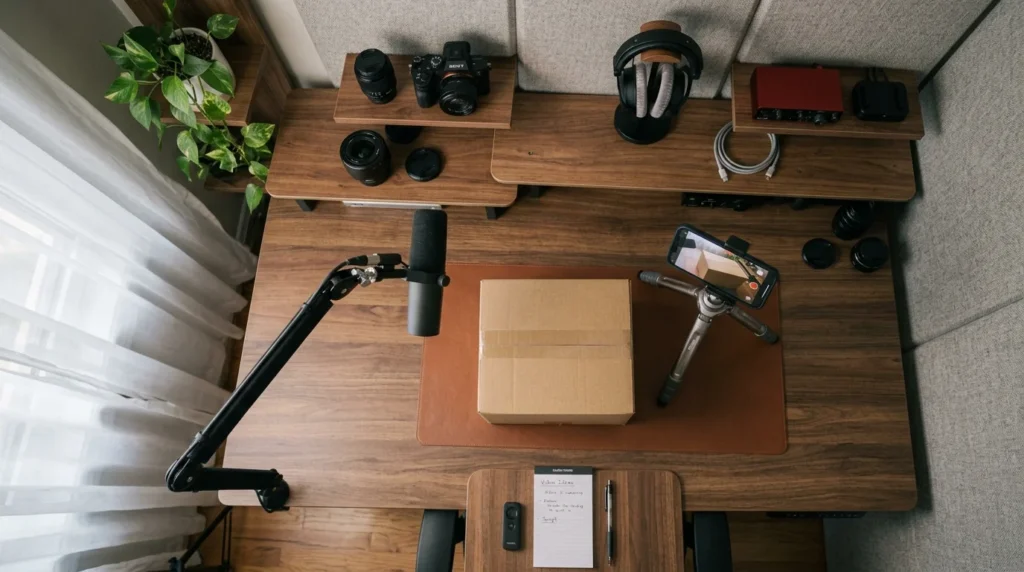
Brands rarely buy “packaging” as one line item. They buy six separate things, and each one does a different job for a different price. Figures below reflect 2026 US supplier pricing for small and mid-volume runs.
| Layer | Typical US cost per order | What it actually changes |
|---|---|---|
| Outer carton (the shipper) | $0.50 to $1.00 plain kraft, $1.00 to $3.00 printed outside | Survival first, recognition second. A crushed corner is the fastest route to a refund and a bad clip. |
| Inner packaging (tissue, void fill, sleeve) | $0.15 to $0.75 | Slows the open. Pacing on camera comes almost entirely from this layer. |
| The first reveal (interior print, lift tab, product seated on top) | $1.50 to $2.00 more than a blank interior | The screenshot moment. Nothing else in the box gets photographed as often. |
| Inserts and paperwork (thank you card, guide, coded offer) | $0.05 to $0.40 | The one layer you can measure. A coded card attributes the next order to this box. |
| Returns material (resealable strip, prepaid label, instructions) | $0.20 to $1.00 | Handles the roughly one in five online orders that come back. Cuts support tickets. |
| Sustainability (recycled board, paper tape, right-sized carton) | Neutral to $0.50 more | Mixed. Right-sizing usually pays for itself in shipping. Premium recycled stock usually doesn’t. |
Add it up and a branded parcel lands somewhere between $1 and $8. Mass market brands generally hold packaging near 8% to 15% of retail price, while premium positioning pushes it to 20% or higher.
Key takeaways
- The format is a preview and a performance at once, which is why viewers watch clips for products they already own.
- The reveal is engineered in six layers, and only one of them, the insert, is directly measurable.
- US creator revenue reaches $20.6 billion in 2026, and 59% of it comes from sponsored content.
- A free product sent to a creator is a material connection under FTC rules and has to be disclosed.
- Premium packaging has a real effect on damage rates and shares. Its effect on repeat purchase is much softer than vendors claim.
How a niche habit became a category
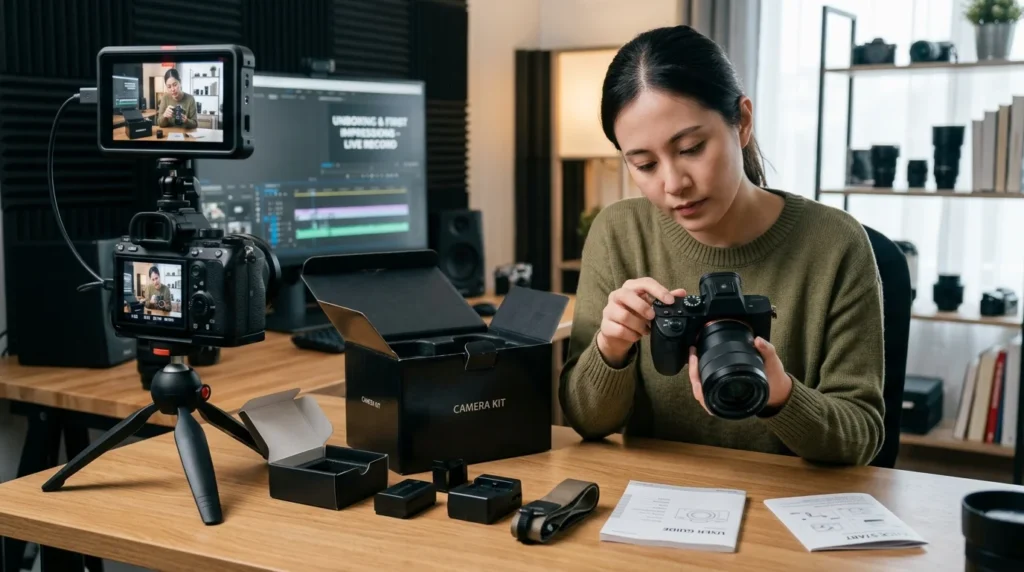
The first widely credited box opening video went up in 2006 and featured a Nokia phone. It was a hobbyist showing other hobbyists what came in the retail package, at a time when product photos online were terrible, and the spec sheet was all you had.
Then the format found children. Toy channels discovered that small kids would watch the same reveal on loop, and that shifted the whole category from tech enthusiasts to a mass audience. Gadget channels grew alongside it. Today the biggest hardware reveals sit beside console launches and graphics card teardowns, the kind of coverage you’ll also find in our tech section.
Scale followed the audience. Goldman Sachs Research put the global creator population near 50 million, with roughly 4% earning more than $100,000 a year. Opening a box on camera is one of the cheapest formats to produce in that population. No script, no crew, no set.
Why people keep watching
Three motives do most of the work, and they rarely appear in the same viewer at the same time.
- Research. Someone is deciding between two headphones and wants to see the actual contents, the cable length, the case, the fit.
- Vicarious purchase. Someone cannot afford the item and watches instead. This drives a lot of watch time on luxury and console content.
- Rhythm. Slow hands, crinkling paper, no narration. This overlaps heavily with ASMR and has almost nothing to do with the product.
Brands care for a reason that sits downstream of all three. EMARKETER reports that 58% of US adults have bought something because of an influencer endorsement, citing the National Advertising Division of BBB National Programs. That number is why a $4 box gets a budget line. You might also like Non Clumping Cat Litter.
That demand also explains why the format keeps migrating. TikTok Shop is forecast to reach $23.4 billion in US ecommerce sales in 2026. On that platform, a reveal is a native selling motion, not a separate piece of content. If you plan campaigns around the shift, the wider strategy work sits in our digital marketing coverage.
The disclosure rules almost nobody mentions
Here is the part that ranking explainers skip. If a brand sends a creator a free or discounted product, that is a material connection under the FTC’s guidance for social media influencers, and it has to be disclosed. The FTC is explicit that the obligation holds even when the brand never asked for a mention.
The agency’s own plain language rules are stricter than most creators assume:
- In a video, the disclosure belongs in the video, not only in the description box.
- On a live stream, repeat it, because most viewers arrive partway through.
- Skip vague shorthand like “sp”, “spon,” or “collab”, and don’t bury it in a block of hashtags.
- A tag or a like can count as an endorsement on its own.
- You cannot describe using a product you never used, and you cannot call it great if you thought it was bad.
Responsibility sits with the creator, not the brand’s agency. That single line is worth knowing before you accept your first PR parcel, whether you’re reviewing skincare or a limited-edition console covered in our gaming section.
Does premium packaging actually pay back?
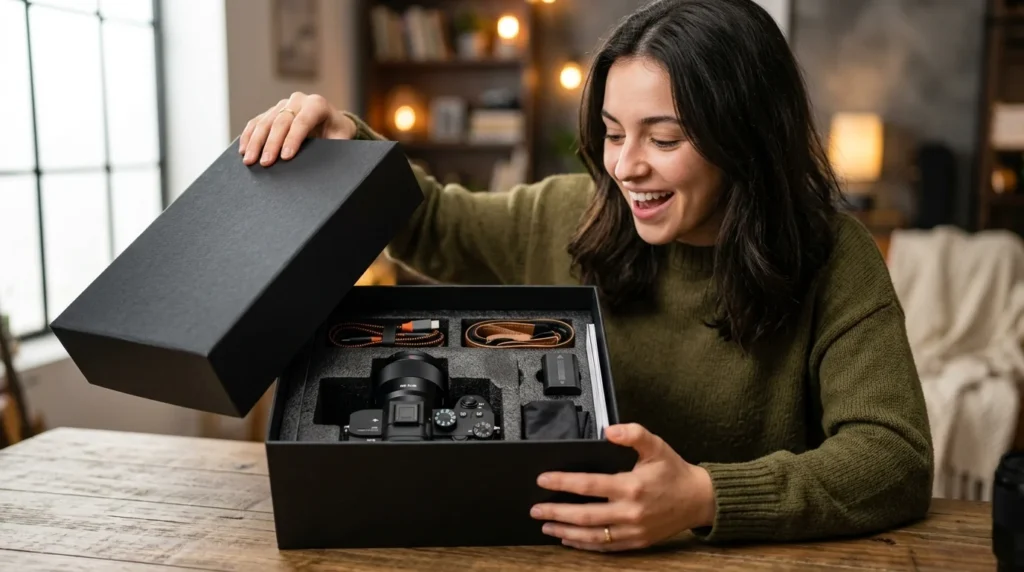
Honest answer: partly, and less than the sales decks suggest. Where it earns its keep has little to do with an unboxing clip.
Most of the widely quoted statistics on this question come from surveys commissioned by packaging companies. That doesn’t make them false, but a vendor asking shoppers whether nice packaging makes a brand feel premium is not a controlled test of repeat purchase. Treat those numbers as directional at best.
What holds up better is the unglamorous half. Right-sized cartons cut dimensional weight charges on every parcel. Better protection cuts damage claims. Return traffic is real money too: the National Retail Federation and Happy Returns put US returns at $849.9 billion in 2025, with 19.3% of online sales sent back. Some 82% of shoppers say free returns influence where they buy. A resealable mailer that costs 30 cents and saves a support ticket beats foil stamping.
There’s also a small run trap. Custom packaging looks cheap per unit at 5,000 pieces and brutal at low volume. Order a single custom mailer box from a US printer today, and the quote lands near $20 apiece, because tooling and setup don’t shrink. Test with plain cartons and a good insert first.
Where to take this next
If you sell physical products, pull your last ten orders apart on your desk and price each of the six layers against the table above. Most brands find they’re overspending on the outside of the carton and underspending on the insert, which is the only piece that tells you whether any of it worked. Start there, measure with a coded offer, and change one layer at a time.
Frequently asked questions
Yes, though the money has moved. Sponsored content now accounts for 59% of US creator revenue, with platform payouts at 24.4%. A reveal works best inside a shoppable post rather than as a standalone eight-minute upload.
It’s the instant the lid comes off, and the product is visible without anything being lifted out. Brands engineer it by printing the box interior and seating the item face up under a pull tab.
No. If there’s no brand relationship and you simply bought something you like, the FTC does not ask you to announce the absence of one.
Keep it between 8% and 15% of the retail price for a mass-market item. Spend the money on fit and protection before finishes.
Beauty, apparel, consumer electronics, and collectibles. Anything with layers, accessories, or a chance of a rare pull.