Non clumping cat litter absorbs urine without forming solid, scoopable clumps. You remove feces daily, while the absorbed urine stays until you fully change it. This format can suit certain cats and cleaning routines. It also requires closer attention to moisture and odor.
Direct answer: Non-clumping litter absorbs liquid into clay, paper, wood, or crystal materials instead of binding it into clumps. Solid waste still needs daily removal. Most boxes need regular full changes because you can’t lift urine out separately. Your cat’s comfort and preference should guide the final choice.
| Quick fact | What it means |
|---|---|
| Audience | U.S. cat owners comparing litter formats |
| How it handles urine | Absorbs liquid without creating scoopable clumps |
| Common materials | Traditional clay, recycled paper, wood or pine pellets, and silica crystals |
| Daily task | Remove solid waste and check for damp or saturated areas |
| Full changes | Usually more frequent than clumping formulas; follow the product directions |
| Common strengths | Simple materials, pellet options, and choices with lower tracking or dust |
| Main tradeoff | Used urine remains in the box until the litter is replaced |
Research note: This guide uses current U.S. veterinary guidance and 2026 pet-care references, like the rest of Notepare’s pet care coverage. It does not claim hands-on product testing. The goal is to help you compare litter formats safely and practically.
Key Takeaways
- Non-clumping formulas absorb urine but don’t form removable clumps.
- Clay, paper, wood, pine, and silica products can all use this format.
- Odor control depends heavily on absorbency, box hygiene, and replacement frequency.
- Most adult cats prefer fine, unscented, clumping litter, but individual preferences vary.
- Kitten guidance differs, so age, behavior, and veterinary advice matter.
- A side-by-side litter test can reveal which texture your cat prefers.
What Is Non-Clumping Litter?
Non-clumping litter is an absorbent substrate that stays loose after it gets wet. Urine spreads into nearby particles instead of forming a firm ball. That changes how you maintain the box and monitor waste.
Traditional versions often use non-clumping clay, but the category is broader today. Paper pellets, wood pellets, and many crystal products also fit this description. The material matters because dust, tracking, texture, and replacement schedules can differ.
How It Works Inside the Litter Box
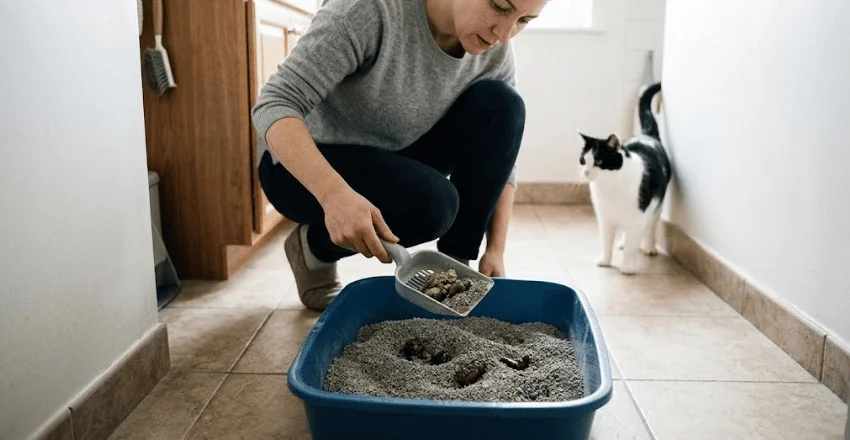
When a cat urinates, absorbent particles pull moisture away from the surface. The wet material stays mixed with the clean portion until you replace it. Solid waste stays visible and should be removed daily.
This design makes daily scooping simple, but it shifts more work to full changes. Odor can build once the absorbent bed approaches saturation. A persistent smell or damp feel usually means the box needs fresh litter sooner.
Common Non-Clumping Materials Compared
Material choice often matters more than the label on the bag. Fine clay feels different from paper or pine pellets under a cat’s paws. Crystal products also behave differently from fibrous materials after absorbing urine.
| Material | Typical texture | Common advantage | Common tradeoff |
|---|---|---|---|
| Traditional clay | Fine to medium granules | Familiar texture and wide availability | Can be heavy and may create dust |
| Paper pellets | Soft, larger pellets | Often low tracking and lower dust | Some cats dislike the larger texture |
| Wood or pine pellets | Firm pellets that soften when wet | Lightweight options are widely available | Texture and scent may deter some cats |
| Silica crystals | Coarse crystals | Strong moisture absorption in many formulas | Texture can feel unfamiliar underfoot |
No material works for every household or every cat. Check package directions because products within one material group can behave differently. Don’t assume pellets or crystals always perform the same way.
Benefits and Drawbacks of Non Clumping Cat Litter
The main benefit is straightforward moisture absorption without hard clumps. Larger pellets may also reduce tracking compared with fine granules. Some paper and wood products produce less dust than traditional fine clay.
| Potential benefit | Related drawback |
|---|---|
| No hard urine clumps to break apart | Urine cannot be removed as a separate clump |
| Pellet formats can track less | Larger pellets may feel uncomfortable to some cats |
| Some materials are lightweight | Full replacements may use more litter over time |
| Many material choices are available | Odor control varies widely by formula and maintenance |
The biggest drawback is that used urine stays inside the box. That can make odor and saturation harder to manage between changes. It can also make urine volume harder to judge than visible clumps.
Clumping Versus Non-Clumping: What Changes?
Clumping litter binds wet particles together, so you can remove urine during daily scooping. Non-clumping litter holds moisture inside the litter bed until replacement. That difference affects cleaning time, waste visibility, and odor management.
| Feature | Clumping | Non-clumping |
|---|---|---|
| Urine removal | Scoopable clumps | Absorbed into the litter bed |
| Daily routine | Remove feces and urine clumps | Remove feces and check saturation |
| Full replacement | Usually less frequent | Usually more frequent |
| Waste monitoring | Urine clumps are easier to observe | Urine volume can be harder to estimate |
| Cat preference | Often preferred by adult cats | Varies by texture and individual cat |
AAHA guidance gives adult-cat preference an important role here. It reports that most adult cats prefer clumping litter and plain, unscented products. That doesn’t mean every adult cat will reject non-clumping litter.
Is It a Good Choice for Kittens?
Advice for kittens is not completely uniform across reputable sources. Purina and Chewy discuss non-clumping options for very young kittens because curious kittens may ingest litter. Their guidance emphasizes age, supervision, and gradual changes.
AAHA’s feline life-stage checklist offers a different starting point for kittens. It suggests unscented clumping sand or the litter a kitten already uses. If your kitten eats litter, ask your veterinarian before changing products.
The practical lesson is to avoid one-size-fits-all kitten rules. Keep the box easy to enter, clean, and familiar during training. A veterinarian can help if you notice ingestion, constipation, diarrhea, or litter refusal.
How Often Should You Change It?
Remove feces daily and inspect the litter bed for dampness or strong odor. Chewy’s current guidance suggests replacing it completely about weekly for many single-cat setups. The exact interval depends on material, box size, and household use.
Follow the manufacturer’s directions when they call for a different schedule. Change the litter sooner if it stays wet or smells after you remove the solid waste. More cats usually mean faster saturation and more frequent maintenance.
Box setup also affects cleanliness and acceptance. AAHA recommends one box per cat, plus one additional box in many households. Quiet, accessible locations can reduce competition and support normal elimination habits.
How to Choose the Right Formula
Start with your cat’s comfort, not a marketing claim. Cornell reports that most cats prefer unscented, fine-textured litter. Pellet users may need a gradual transition because larger pieces feel different.
| Decision factor | What to check |
|---|---|
| Texture | Whether your cat digs, covers waste, and enters comfortably |
| Fragrance | Unscented options are often easier for scent-sensitive cats |
| Dust | Package claims and visible dust during pouring |
| Tracking | Particle size and how much leaves the box |
| Odor control | How quickly smell returns after daily solid-waste removal |
| Maintenance | Whether the required full-change schedule fits your routine |
If you are unsure, test two litter types in separate boxes. AAHA specifically suggests offering different litters separately to learn a cat’s preference. Keep the boxes similar so the substrate remains the main difference.
Changing Litter Without Creating Box Avoidance
Cats can reject a sudden texture or scent change. Cornell recommends gradual brand changes by mixing small amounts of the new product with the old. Watch your cat’s digging, covering, and box-entry behavior during the transition.
If accidents start after a switch, do not punish the cat. Restore a familiar option and review box cleanliness, location, and accessibility. Repeated house-soiling also deserves veterinary attention because medical causes can look behavioral.
Broader safety planning also matters for animal households. Notepare’s pet first-aid preparedness guide covers emergency planning for dog owners.
Frequently Asked Questions
Where does urine go in non-clumping litter?
Urine is absorbed into the litter particles and nearby material. It doesn’t form a separate, scoopable ball. The wet material stays in the box until you replace the litter.
Does non-clumping litter control odor?
It can control odor as long as the material stays absorbent and reasonably fresh. Performance varies by formula, box size, and cleaning schedule. Odor usually increases as absorbed urine accumulates.
Can adult cats use non-clumping litter?
Yes, adult cats can use it if they accept the texture and the box stays clean. AAHA reports that most adults prefer clumping litter. Your cat’s consistent box use matters more than following a category label.
Is non clumping cat litter good for kittens?
Some current pet-care sources recommend it for young kittens because ingestion is a concern. AAHA guidance also supports unscented clumping sand for kittens. Ask your veterinarian when a kitten eats litter or has digestive symptoms.
Is non-clumping litter cheaper?
Some traditional clay products cost less upfront than premium clumping formulas. Monthly cost can differ because you may need to change it more often. Compare replacement frequency, bag size, and household use instead of bag price alone.
The Takeaway
Non-clumping litter can work well when its texture, dust level, and maintenance needs fit your household. It asks you to replace the full litter bed more often. Your cat’s willingness to use the box remains a useful practical signal.
Choose one material, follow its cleaning directions, and watch how your cat responds. If acceptance is uncertain, test another texture in a separate box. Return to the Notepare homepage for more practical household and pet-care guides.