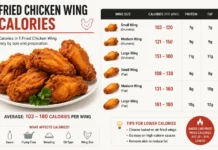
The calorie count of fried chicken wings varies more than a single menu number may suggest. A medium fried wing often contains about 100 to 160 calories. Six wings may provide roughly 600 to 960 calories before dips, fries, or drinks are included. Elsewhere on the site, we look at Unboxing in.
Fried Chicken Calories Wings: The size of each wing, the skin, breading, frying oil, and sauce all affect the final total. The restaurant’s nutrition information or the product label will provide the most accurate figure. When that information isn’t available, the estimates below can help you calculate a reasonable range.
| Wing preparation | Estimated calories per wing | Estimated calories for six wings | Main calorie sources |
| Plain-cooked wing with skin | About 86 | About 516 | Chicken skin and natural fat |
| Flour-coated fried wing | About 103 | About 618 | Skin, flour, and frying oil |
| Batter-dipped fried wing with skin | About 159 | About 954 | Batter, skin, and absorbed oil |
These figures are general estimates rather than universal values. Wing size, cooking method, and the amount of coating can produce noticeable differences.
How Fried Chicken Calories Wings Change by Preparation
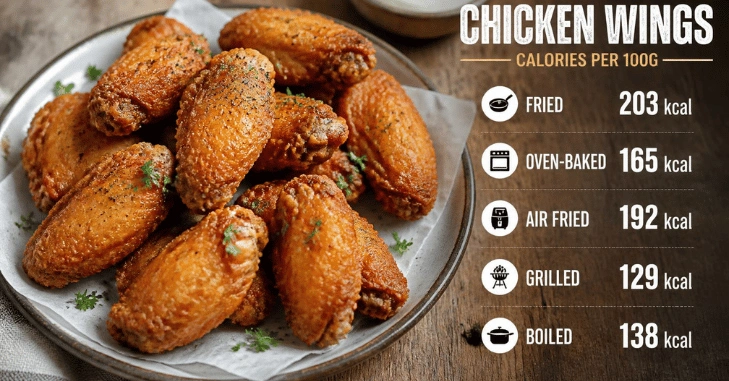
Two wings that look similar may contain different amounts of calories. One may have a thin flour coating, while another may use a thick wet batter that absorbs more oil. A flour-coated wing may contain about 103 calories. Fried Chicken Calories Wings: A larger, batter-dipped wing with skin may contain closer to 159 calories. Across a six-piece order, that difference could add more than 300 calories.
Wing Size and Edible Weight
Terms such as small, medium, jumbo, flat, and drumette aren’t standardized across restaurants. A large drumette may contain much more edible meat and skin than a small flat. Bones also make calorie tracking more difficult. The total weight of a wing includes bone, which isn’t eaten. Logging the entire weight as edible food may therefore overstate the calorie count.
Breading and Frying Oil
Breading adds carbohydrates before the wing reaches the fryer. It may also absorb and hold additional oil during cooking. A thin flour coating usually adds fewer calories than a thick batter. Frying temperature, cooking time, draining, and holding time can also affect oil absorption. As a result, homemade wings and restaurant wings may have different calorie counts.
Sauces and Dips
Dry seasonings often add fewer calories than thick sauces. Sweet barbecue sauce, honey-based glazes, and sticky chili sauces may add sugar. Butter-based buffalo sauces and creamy dips add fat.
The amount of sauce matters as much as the type. A lightly tossed order shouldn’t be logged the same way as wings covered in a heavy coating. Ranch, blue cheese, and other dips should be counted separately whenever possible.
Calories in One, Six, and Ten Fried Wings

A practical estimate should include a low, middle, and high range. This method is more useful than assuming every restaurant serves wings of the same size.
| Number of wings | Light coating: 105 each | Medium estimate: 130 each | Heavy batter: 160 each |
| 1 | 105 calories | 130 calories | 160 calories |
| 3 | 315 calories | 390 calories | 480 calories |
| 6 | 630 calories | 780 calories | 960 calories |
| 10 | 1,050 calories | 1,300 calories | 1,600 calories |
This table is a planning tool rather than a precise nutritional calculation. Use the middle column when you can’t identify the coating. Choose the higher estimate for jumbo, heavily breaded, or generously sauced wings.
Bone-In and Boneless Wings Aren’t the Same
Traditional bone-in wings come from the wing section of the chicken. Menu items described as boneless wings are usually breaded pieces of chicken breast rather than deboned wing meat.
Boneless pieces may have more breading across their surface. Their calorie counts depend on piece size, coating, sauce, and serving weight. Six boneless pieces shouldn’t automatically be treated as equivalent to six bone-in wings. Compare the serving weight when a menu provides one. Weight usually offers a better comparison than piece count alone.
How to Estimate Your Order More Accurately

Follow these steps when exact nutrition information isn’t available:
- Check the restaurant’s nutrition page. Use the restaurant’s published figure before relying on a general estimate.
- Identify the preparation. Look for terms such as plain, flour-coated, breaded, or batter-dipped.
- Consider the size. Treat jumbo wings as a larger serving, even when the number of pieces stays the same.
- Count sauces and dips separately. Use a label, restaurant data, or measured tablespoons when possible.
- Choose a calorie range. Record a middle estimate and note a reasonable upper limit.
For example, six medium breaded wings could be estimated at about 780 calories. If the coating is thick or the pieces are large, 960 calories may be a more realistic upper estimate. Using a range avoids false precision and allows for differences in recipes and portion sizes.
Can Fried Wings Fit Into a Balanced Diet?
Fried chicken wings provide protein, but the skin and coating can raise the fat and calorie content. Sauces, seasoning blends, and dips may also increase sodium.
The daily value for sodium is 2,300 milligrams on a 2,000-calorie diet. Instead of judging one food in isolation, consider how it fits into your meals for the entire day. A higher-fat or higher-sodium meal can be balanced with lighter choices later.
Portion size makes one of the biggest practical differences. Four wings served with vegetables and a measured amount of dip will usually be easier to fit into a daily calorie target than ten wings served with fries and unlimited sauce. You can explore more serving-size and food explainers in Notepare’s food section. For broader wellness topics, visit the site’s health articles.
Ways to Lower the Calories Without Skipping Wings

Small changes can reduce the total calorie count while allowing you to enjoy the main part of the meal:
- Choose unbreaded wings when available.
- Request the sauce on the side.
- Measure creamy dips instead of eating directly from a large container.
- Replace fries with salad, vegetables, or another lighter side.
- Choose water or a zero-calorie drink.
- Divide a large order into portions before you begin eating.
Cooking methods that use less added fat, such as baking, grilling, or air frying, may also reduce calories compared with deep frying. The final total still depends on the skin, oil, coating, and sauce. For more information about activity and energy balance, browse Notepare’s fitness articles.
Your Next Step
Before logging your next order, identify the size, coating, and sauce. Use the restaurant’s published nutrition information whenever possible. When no official figure is available, calculate a reasonable low-to-high range and count every dip, sauce, and side separately. Fried Chicken Calories Wings. This approach may not produce a laboratory-level measurement, but it will give you a practical estimate that is useful for meal planning.
Frequently Asked Questions
A useful estimate is 100 to 160 calories per wing. A wing with a thin flour coating may fall near the lower end of the range. A large, batter-dipped wing with skin may fall near the upper end.
Six fried wings often contain about 600 to 960 calories before sides, sauces, and dips are included. Small, lightly coated pieces may contain fewer calories, while jumbo or heavily battered pieces may contain more.
Use about 130 calories per medium wing as a middle estimate. Count sauces and dips separately. Increase the estimate toward 160 calories per wing when the pieces are large or heavily battered.
Yes. Chicken skin contains fat, so removing it generally reduces the calorie count. The exact difference depends on the size of the wing and how much breading comes off with the skin.
No. Air frying may require less added oil, but the skin, breading, butter, and sauce still contribute calories. Heavily sauced air-fried wings may contain more calories than plain oven-baked wings.
Serving weight is usually more reliable. Six small flats and six jumbo drumettes aren’t equal portions. Use edible weight and the restaurant’s nutrition information whenever they are available.