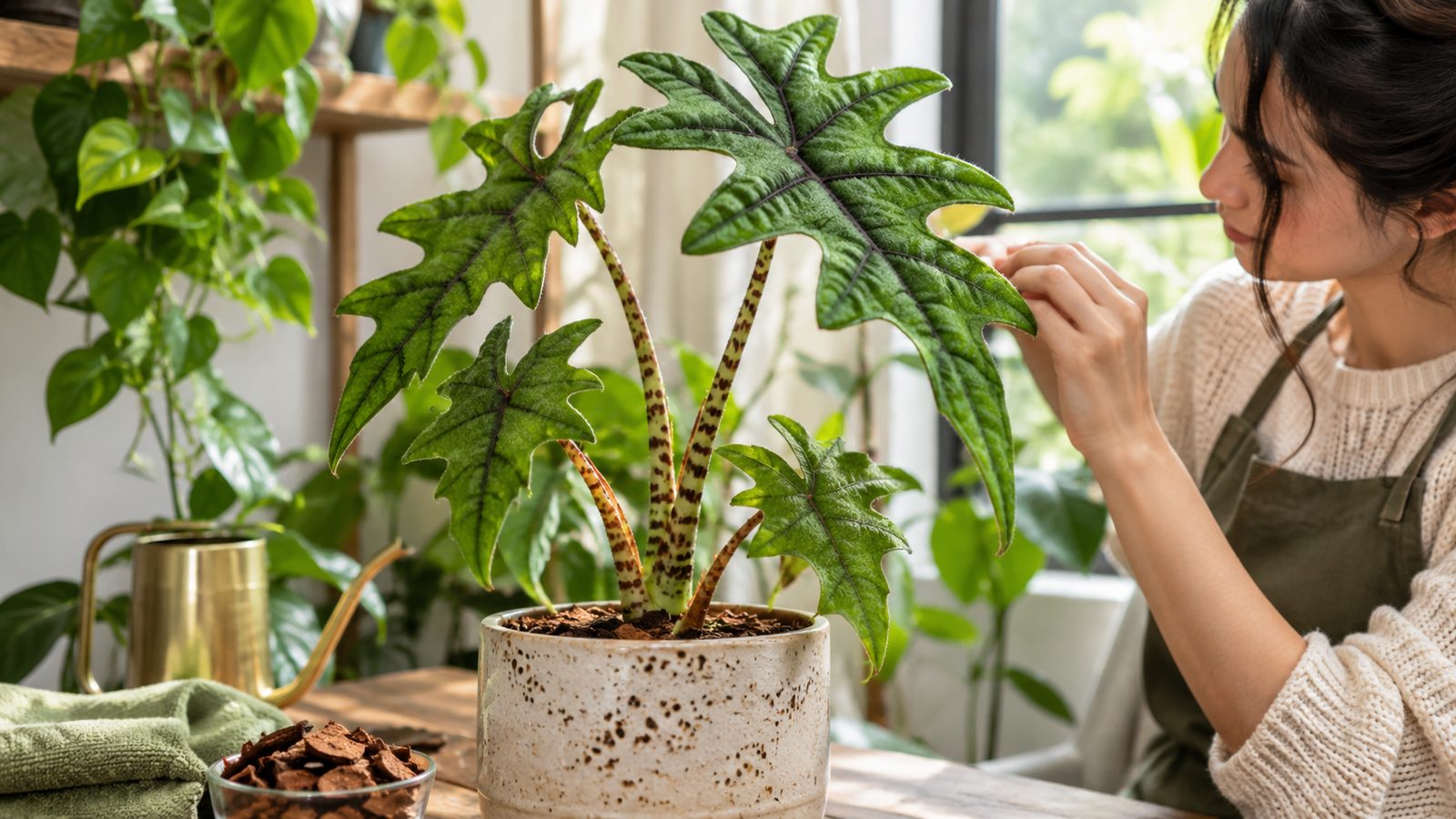
Alocasia Jacklyn is a dramatic tropical houseplant known for deeply divided leaves, dark veins, and patterned stems. It grows best with bright indirect light, warm temperatures, airy soil, and careful watering. U.S. growers should also protect it from heating vents, air conditioners, and cold winter windows. Direct answer: Give this plant bright filtered light and water after the upper soil begins drying. Keep temperatures near 65°F to 85°F and use a loose, fast-draining potting mix. Moderate humidity works, although higher humidity can support cleaner foliage and steadier growth.
| Care factor | Recommended starting point |
|---|---|
| Botanical name | Alocasia tandurusa |
| Light | Bright, indirect or filtered light |
| Water | Water when the top 1–2 inches feel dry |
| Soil | Loose, chunky, well-draining aroid mix |
| Temperature | About 65°F to 85°F |
| Humidity | Around 50% to 70% when practical |
| Fertilizer | Diluted houseplant fertilizer during active growth |
| Propagation | Corms or offsets |
| Pet safety | Toxic if chewed or swallowed |
| Common problems | Spider mites, yellow leaves, root rot, brown edges |
Key Takeaways
* Choose bright indirect light instead of strong midday sun. * Let the upper layer of soil dry before watering again. * Use a container with drainage holes and an airy potting mixture. * Protect the plant from cold windows, heaters, and strong air-conditioning vents. * Watch leaf undersides regularly for spider mites. * Propagate through corms or offsets rather than leaf cuttings. * Keep the plant away from pets and young children.
What Is Alocasia Jacklyn?
The plant sold under this name is botanically recognized as Alocasia tandurusa. Botanists list it as an accepted species native to Sulawesi. Its scientific description was formally published in 2023. Mature leaves develop unusually deep divisions that can resemble antlers. Their textured surfaces and strong veins create a rugged appearance unlike many common elephant ears. Brownish or purple markings on the petioles add another recognizable feature. Older plant listings may call it Alocasia sulawesi or use slightly different trade names. Those labels can cause confusion when comparing care guides or shopping online. Checking the scientific name helps identify the plant more accurately.
How Much Light Does It Need?
Place the plant where it receives bright but filtered light for much of the day. An east-facing window often works well inside many U.S. homes. A brighter south or west window may require a sheer curtain. Strong midday sunshine can damage foliage after prolonged exposure. Low light creates another problem because growth often slows and new leaves may remain smaller. Growers also commonly recommend medium to bright indoor light. Artificial grow lights can help during dark winters or in rooms with limited windows. Keep the lamp far enough away to avoid heating the foliage. Follow the light manufacturer’s recommended distance because lamp intensity varies considerably.
How to Water Without Causing Root Rot
Check the potting mix rather than following a fixed weekly schedule. Water thoroughly when the upper one or two inches have started drying. Allow excess water to drain completely before returning the pot to its decorative cover. Watering frequency changes with season, light, container size, and indoor temperature. A plant near a bright summer window may dry much faster than one during winter. Checking the soil prevents both chronic dryness and prolonged saturation. Yellow leaves combined with constantly wet soil can indicate excessive moisture around the roots. Drooping alone does not always mean the plant needs more water. Check moisture first because thirsty and damaged roots can produce similar symptoms.
The Best Soil and Pot for Healthy Roots
Use a loose mixture that holds some moisture without staying dense and waterlogged. Orchid bark, perlite, coco coir, and quality potting mix can create useful structure. The goal is air around the roots alongside dependable moisture. Always choose a container with functional drainage holes. A decorative pot without drainage can trap runoff around the root ball. Standing water greatly increases the chance of damaged roots and declining foliage. Avoid moving a small plant directly into an oversized container. Extra potting mix remains wet longer because young roots cannot use that moisture quickly. Increase the pot size gradually when roots become crowded.
Humidity and Temperature for U.S. Homes
Warm indoor temperatures generally suit this tropical species. A range near 65°F to 85°F provides a practical starting point. Avoid prolonged exposure below about 60°F whenever possible. Average household humidity may be enough for an established plant. Conditions around 50% to 70% can help reduce dry leaf edges. A small humidifier offers more predictable results than frequently misting leaves. Winter heating can dry indoor air quickly across much of the United States. Keep foliage away from hot furnace vents and radiators during cold months. Notepare’s guide to winterizing an HVAC system also explains common seasonal heating considerations. Summer air conditioning can create another environmental swing. Direct cold airflow may cool leaves and potting media faster than expected. Stable room conditions usually matter more than chasing an exact humidity number.
Fertilizer and Seasonal Growth
Feed during periods when the plant is actively producing leaves. A balanced houseplant fertilizer diluted according to its label is usually sufficient. Applying extra fertilizer will not force healthy growth when light or roots are poor. Reduce feeding when growth slows significantly during colder or darker months. Fertilizer salts can accumulate when the plant uses fewer nutrients. Flushing the potting mix occasionally can reduce unwanted salt buildup. Light and temperature changes often influence seasonal growth indoors. Maintaining a comfortable home environment can help reduce sudden stress. Regular HVAC maintenance and stable airflow can also support more consistent indoor conditions.
Common Problems and What They Mean
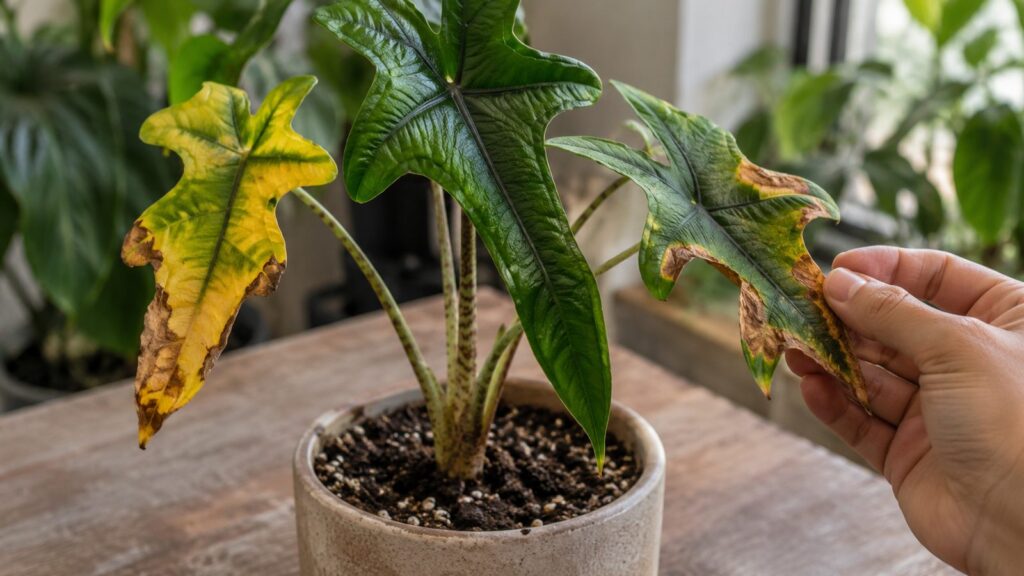
Yellow leaves often point toward watering stress, aging foliage, or unhappy roots. Check soil moisture and drainage before adding fertilizer. Removing the cause matters more than treating the leaf itself. Brown edges can develop after dry conditions, low humidity, salt buildup, or irregular watering. Review several care factors instead of assuming humidity is always responsible. Damaged tissue will not turn green again, but healthy new growth can follow. Spider mites are a frequent concern for indoor Alocasias. Inspect leaf undersides for fine webbing, tiny moving pests, or stippled discoloration. Isolating affected plants early can reduce spread to nearby houseplants. Sudden leaf loss can also follow shipping, repotting, or environmental changes. A healthy underground corm may remain viable even after foliage declines. Continue monitoring moisture carefully instead of automatically discarding the plant.
How to Propagate It
Propagation usually works through corms or offsets produced around the parent plant. Repotting provides a convenient opportunity to inspect the root zone for these structures. Handle roots gently because unnecessary damage can delay recovery. Small corms can be separated and grown in moist, airy media. Warmth and steady humidity can encourage rooting and new shoots. Avoid keeping the propagation medium permanently saturated. A detached leaf cannot regenerate a complete plant. The growing structure needed for new development comes from the corm or suitable division. This distinction prevents wasted time trying common leaf-cutting methods.
Repotting Without Stressing the Plant
Repot when roots become crowded or the potting mix has broken down significantly. Spring and early summer are convenient because stronger growth can support recovery. Emergency repotting may still be necessary when root rot develops. Move into a container only slightly larger than the previous pot. Replace compacted media with a fresh, airy mixture. Keep the plant at roughly its previous planting depth. After repotting, provide stable light and temperature while the roots recover. Avoid heavy fertilizer immediately after disturbing the root system. Normal growth can resume once the plant settles into its new container.
Where to Place It Indoors
Choose a bright location away from harsh afternoon sun and strong mechanical airflow. A position near an east window often combines usable light with gentler temperatures. Rotate the pot occasionally if growth begins leaning strongly toward the window. Avoid placing the plant beside exterior doors that open repeatedly during freezing weather. Cold drafts can produce rapid temperature changes around leaves and roots. Similar fluctuations can occur directly beneath powerful air-conditioning vents. Indoor climate choices affect people, plants, and household energy use together. Notepare’s article about strategic air-conditioning placement explains why airflow location matters indoors. For plants, avoiding a constant blast of conditioned air is the main concern.
Is It Safe Around Cats and Dogs?
No Alocasia should be treated as an edible or pet-safe houseplant. Pet poison-control sources identify Alocasia species as toxic to cats and dogs. They contain insoluble calcium oxalate crystals that can irritate the mouth. Possible signs include drooling, oral pain, swelling, vomiting, and difficulty swallowing. Keep the pot somewhere pets cannot chew fallen or living plant material. Contact a veterinarian or poison-control service promptly after suspected ingestion. Wear gloves if your skin reacts when handling damaged stems or leaves. Wash your hands after pruning or dividing the plant. These simple precautions also reduce accidental exposure around children.
Frequently Asked Questions
Is Alocasia Jacklyn difficult to grow?
It requires more attention than many forgiving houseplants, but its needs are manageable. The biggest challenges are excess water, poor drainage, spider mites, and sudden environmental changes. Consistent care usually works better than frequent adjustments.
How often should I water it?
There is no reliable universal schedule because homes and seasons differ. Check whether the upper one or two inches of soil have started drying. Water thoroughly when needed, then let excess moisture leave the pot.
Does it need 70% humidity?
No single humidity percentage guarantees healthy growth. Higher humidity can help foliage, but roots, light, temperature, and airflow matter equally. A stable room near 50% to 60% can still support healthy growth.
Why are the leaves turning yellow?
Overwatering is one possible cause, but it is not the only explanation. Old leaves naturally yellow, while damaged roots and environmental stress can produce similar symptoms. Check moisture, drainage, roots, and recent changes before taking action.
Can I grow it outdoors in the United States?
Outdoor success depends heavily on local temperatures and seasonal conditions. This tropical species cannot tolerate freezing weather and usually needs protection from intense direct sun. Many U.S. growers keep it indoors or move containers outside only during warm weather.
Can I propagate it from a leaf?
A leaf cutting alone does not contain the structures required to produce a new complete plant. Propagation should use corms, offsets, or suitable divisions from the parent. Check for them when repotting a mature specimen.
Final Care Checklist
A healthy specimen does not require complicated daily maintenance. Give it bright indirect light, warm conditions, drainage, and measured watering. Then watch the plant for changes instead of constantly changing its routine. Check the soil before watering and inspect leaves for pests each week. Adjust its location when seasonal heating or cooling creates strong drafts. Those simple habits prevent many problems before they become serious. With stable conditions, the deeply divided foliage becomes the plant’s main reward. New leaves also provide useful feedback about current growing conditions. Stronger, well-shaped growth usually shows that your routine is working. —